
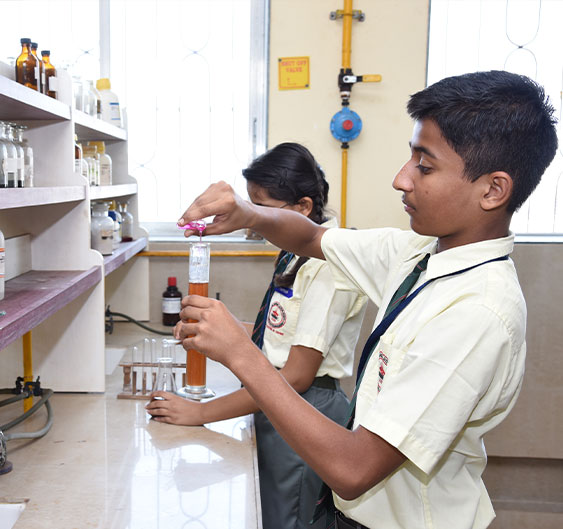
The Secondary years are an important stage in a student's journey. Children begin to develop stronger opinions, deeper interests and a greater sense of independence. At S. J. Poddar Academy, we provide them with an academic environment that encourages them to think critically, ask questions, explore ideas and take responsibility for their learning.
The ICSE curriculum provides a strong academic foundation, while our teaching practices go beyond the prescribed textbook. Lessons are designed to encourage conceptual understanding, application, research, discussion, problem-solving and real-world connections.
A Geography lesson, for instance, may move beyond learning facts about agriculture to examining the challenges faced by farmers and exploring possible solutions. A Science concept may be connected to a real-life application. Literature becomes an opportunity to understand people, society and different perspectives rather than simply finding answers to questions.
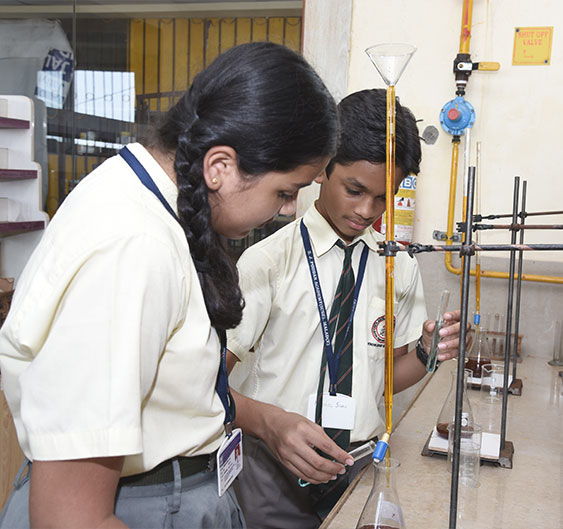
Concept-Based Learning
Students are encouraged to understand concepts in depth rather than depend on rote memorisation. They are given opportunities to explain, analyse, compare and apply their understanding.
Inquiry and Research-Based Learning
Students investigate questions, gather information, examine evidence and present their findings. This develops curiosity and prepares them to become increasingly independent learners.
Competency-Based Learning
Classroom activities and assessments increasingly focus on what students can do with their knowledge—analyse, interpret, reason, apply, create and communicate.
Project and Problem-Based Learning
Students work on authentic problems and projects that require planning, collaboration, creativity and decision-making.
Interdisciplinary Learning
Students are encouraged to understand the connections between subjects and to approach real-world issues from different perspectives.
Technology, Coding, Robotics and AI
Students are introduced to coding, robotics, artificial intelligence and digital tools, enabling them to understand technology, use it responsibly and explore how it can be used to solve problems.
We believe that the Secondary years should provide students with opportunities to discover their interests and develop skills that may not always find space within a traditional classroom.
Our wide range of clubs and enrichment activities allows students to explore different areas according to their interests and abilities. Clubs provide opportunities for research, creativity, communication, collaboration and leadership. Students learn to organise activities, work as teams, take responsibility and present their ideas with confidence.
These experiences help students discover that learning can happen in many different ways and that their talents extend far beyond examination performance.
As students move towards greater independence, understanding money and making responsible financial decisions becomes increasingly important. Our Financial Literacy programme introduces students to practical concepts such as budgeting, saving, spending, banking, investment awareness, financial planning and responsible decision-making in an age-appropriate manner.
The objective is to help students develop the confidence and judgement needed to navigate the financial decisions they will encounter in adult life.
Academic achievement is meaningful only when it is accompanied by strong values and a sense of responsibility.
Through Value Education, classroom discussions, stories, activities, projects and everyday school experiences, students are encouraged to reflect on values such as integrity, empathy, respect, responsibility, compassion, honesty, perseverance and citizenship.
Rather than treating values as isolated lessons, we encourage students to apply them in their relationships, choices and actions.
The Secondary years can bring academic pressure, changing relationships and new expectations. We therefore place importance on the emotional well-being of our students.
Our Social-Emotional Learning (SEL) initiatives provide opportunities for students to understand themselves better, manage emotions, develop empathy, communicate effectively and make responsible decisions.
Through discussions, reflective activities, collaborative tasks and age-appropriate interventions, students are encouraged to develop self-awareness, resilience, confidence and healthy relationships.
We want our students to know that seeking help, expressing an emotion, listening to another person and learning from a mistake are all important parts of growing up.
Physical activity is an essential part of holistic education. Taekwondo, Martial Arts, Skating, Football, Volleyball, Basket Ball, Cricket, Chess, Carrom, Yoga, and Lawn Tennis gives students an opportunity to develop physical fitness along with concentration, discipline and self-confidence.
The practice encourages focus, perseverance, self-control, respect and determination—qualities that are valuable both on and off the field.
Along with Taekwondo, sports and physical education provide students with opportunities to develop teamwork, sportsmanship and a healthy approach to competition.
The Educational Studio is a space where academic learning meets creativity, technology and communication. It provides students with opportunities to learn and express themselves through visual media, presentations, digital tools, creative projects and film-based learning.
The Studio encourages students to move from being consumers of information to becoming creators of content and ideas. It gives them a platform to research, collaborate, communicate and present their understanding in different formats.
In collaboration with Purple People Labs, learning through film pedagogy has brought much needed change in critical thinking and problem solving skills among the students. Age-appropriate films and visual narratives are used to stimulate discussion, develop observation and encourage children to look at situations from different perspectives.
Clubs, Creativity and Leadership
Our Secondary students have opportunities to participate in a wide variety of clubs and interest-based activities. These provide a platform for students to explore areas such as technology, science, literature, public speaking, creative arts, environmental awareness, entrepreneurship and other areas of interest.
Club activities also help students develop skills that are difficult to teach through a textbook alone—leadership, teamwork, communication, time management, initiative and responsibility.
Students are encouraged to take ownership of activities, plan events, collaborate with their peers and share their learning with others.
As students progress through the Secondary section, we want them to become increasingly independent in the way they think, learn and make decisions.
Our academic programme therefore brings together the rigour of the ICSE curriculum with opportunities for research, technology, financial literacy, leadership, social-emotional learning, physical development, creativity and real-world application.
The aim is not simply to prepare students for their ICSE examinations, important though they are. It is to prepare them for the many choices and challenges that lie beyond school.
We want our students to leave S. J. Poddar Academy as young people who can think independently, communicate confidently, act responsibly and approach the future with curiosity and courage.
This is the spirit we hope to nurture throughout the Secondary years.